SITUATION:
The standard agitator seals installed by the OEM proved to be unsuitable for yogurt production. The product being processed kept sticking, causing the dry-running seals to fail.
Innovative sealing concept ensures smooth production and consistently high product quality

SITUATION:
The standard agitator seals installed by the OEM proved to be unsuitable for yogurt production. The product being processed kept sticking, causing the dry-running seals to fail.
CHALLENGE:
A sealing solution was required that is resistant to running dry, can be operated hygienically and without contamination, and is also easy to service.
SOLUTION:
The patented SeccoLip offers the safety and reliability of a mechanical seal but uses the functional principle of shaft sealing lips.
The dairy is one of the most modern milk processing plants in Europe. It produces virtually every type of dairy product, from milk, butter, yogurt, and cheese to whey derivatives. The state-of-the-art machinery consists of many complex production systems, some of which are fully automated.
Sixteen agitators that were initially supplied with dry-running mechanical seals from an American manufacturer are in use in the yogurt production area. But it quickly became clear that these were no match for the production process. The seal failures were announced by loud squeaking noises. The sliding rings broke, and the agitator seals failed after only a short running time.
And it wasn't just the costly production downtime that the dairy had to deal with. The technicians realized that the yogurt products could be contaminated by fragments of the sliding rings. This meant that entire production batches were no longer suitable for sale.
The company’s technical managers then contacted the sealing experts at EagleBurgmann to get to the bottom of the causes. After all, dry-running mechanical seals are generally a good choice for moderate operating conditions such as those in yogurt production. Single dryrunning mechanical seals are efficient to operate since they do not require a seal supply system. Because no flushing/barrier medium is used, any resulting contamination is also excluded.
Fermenter agitators for bioreactors were being used in the case at hand. An in-depth analysis of the damage revealed that the product being processed penetrated the mechanical seal after a short running time. This resulted in adhesions forming on the sliding surfaces, which first led to caking and finally to the sliding rings rupturing.
This led to the question: Is there any sealing solution that has no sensitive reactions when running dry, can be operated hygienically and without contamination, and is also easy to service?
The new SeccoLip brings all of these advantages together, making it a true innovation among agitator seals. It offers the safety and reliability of a mechanical seal but uses the functional principle of shaft sealing lips. The PTFE material of the sealing lips satisfies the strict regulations of the U.S. Food and Drug Administration, making it suitable for use in food production. Thanks to its modular design, the SeccoLip can also be coordinated precisely for any application, in terms of the number and orientation of the sealing lips, for instance. Hygiene flange, flushing and cooling flanges are available as options. They can be used according to as well as apart from DIN standards.
Designed to meet customer requirements
The compact SeccoLip was designed for the dairy plant with two lips and without roller bearings. A special flange was also designed to make seal replacement for maintenance quick and easy. It allows both the shaft and housing flange to remain on the tank and the hole pattern of the original seal to still be used. This allowed the retrofit to be carried out by the dairy’s own technicians in a cost-effective and time-efficient manner.
The initial retrofitting quickly revealed that the new sealing concept works. All sixteen agitators have been converted to the new SeccoLip in the meantime. Since then, production has been running quietly, trouble-free, efficiently, and hygienically safe.
For more information on the SeccoLip461 and SeccoLip481, click here.
Lip seal for agitators, mixers, dryers, reactors and screw conveyors.
EagleBurgmann product portfolio of agitator seals.

Things get hot in rotary kilns, very hot in fact. In the production of cement, for example, the thermometer measures more than 1,000 degrees Celsius. Sealing systems from EagleBurgmann, a company of the Freudenberg Group and EKK, make sustainable contributions to environmental protection, energy efficiency and process reliability under these "fiery" high-temperature conditions.

In countries like Canada, South Korea and Argentina, CANDU reactors (“Canada deuterium uranium reactors”) use nuclear fuel to generate electric power. Unlike the ressurized water reactors and boiling water reactors mainly used in Europe, CANDU reactors can be refueled during operation to increase availability. However, sealing the hydraulic machines used in this process represents a technical challenge.

A boiler circulation pump in a power plant conveys very hot and pressurized water. The pump has no cooling jacket, which increases the risk of a thermosiphon effect.

Pharmaceutical manufacturers like the Bayer AG rely on mechanical seals in their manufacturing plants.
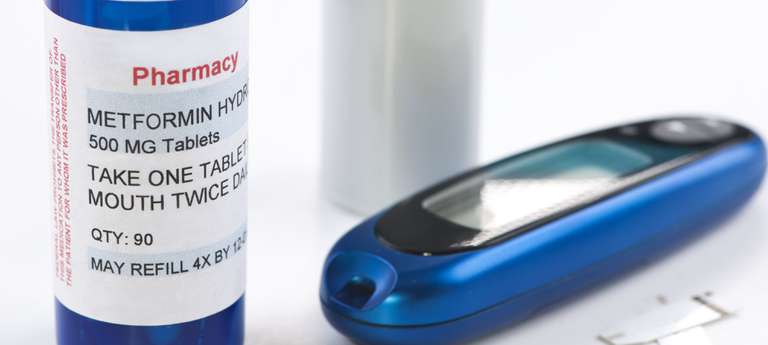
When the process medium in the production of metformin may not be contaminated with sealing medium under any circumstances, gas-lubricated seals for agitator shafts are the first choice. The Norwegian company Vistin Pharma took a daring step away from oil-lubricated to nitrogen overlayed seals.

Mechanical seals are not always the best choice. In roller dryers used in the production of pharmaceutical powder, abrupt shaft deflections during processing led to increased seal wear. Operation was maintenance-intensive and prone to faults.